How to overcome lack of experience when planning your career change

How to Change Careers into Climate or Sustainability (Even Without Sector Experience)
Imagine this.
You spot a role in the marine space while searching for climate change career opportunities or sustainability jobs.
It ticks every box:
ocean health
biodiversity
coastal resilience
plastic reduction
proudly “mission-led”
Then the familiar doubt arrives, right on schedule:
“I don’t have sector experience.”
If you’re exploring a career change into climate change or sustainability, this thought is almost universal. And it’s one of the biggest reasons talented mid-career professionals hesitate, stall, or self-reject from roles they could genuinely be good at.
Here’s the important part:
sector experience is often the least useful way to judge fit — especially outside specialist scientific or academic roles.
What matters far more is whether you know how to operate in the same kind of environment.
That’s where the Overlap Matrix comes in.
Read time: 5.5 minutes
Why “Lack of Sector Experience” Blocks Climate and Sustainability Career Transitions
When people search for jobs in climate change or sustainability job opportunities, they’re often told they need “relevant sector experience”.
In practice, this phrase usually acts as shorthand for much more practical questions:
Can you be effective quickly?
Do you understand the customer or stakeholder reality?
Will you need constant hand-holding?
Do you know what “good” looks like in this type of organisation?
Sector experience is a proxy.
Overlap is the signal.
Massive caveat on this one: this does not hold for the very technical specialised skill sets. The kind that typically require a certification to qualify.
The Overlap Matrix: A Better Way to Assess Fit for Climate and Sustainability Role
I was recently listening to a conversation between recruiter Cherry Swayne and Ketch Davey, Chief People Officer at NatureMetrics, about hiring people without direct domain experience.
Cherry described a simple but powerful way to assess fit when someone is changing sectors.
When you don’t have direct sector experience, the strongest overlap signals usually come from:
The type of product or service you’ve worked with
The type of customer or buyer you’ve worked with
The type of organisation or company stage you’ve operated in
That becomes your new lens.
Not:
“Do I have marine experience?”
But:
“Have I operated in a similar reality before?”
The Overlap Matrix Explained
Picture a simple three-part grid. For any climate or sustainability role you’re considering, assess overlap across the following areas.
A) Product or Problem Type
What are you building, running, or improving?
data-heavy platforms vs physical operations
regulated environments vs experimental work
complex stakeholder systems vs simple B2C journeys
long sales or implementation cycles vs fast adoption
This matters far more than the sector label attached to the role.
B) Customer or Buyer Type
Who decides? Who influences? Who signs?
enterprise procurement
public sector bodies
scientific or technical buyers
CFO-led purchasing
operations-led adoption
Many climate roles fail not on mission, but on misunderstanding how decisions actually get made.
C) Organisation or Company Stage
What’s the operating system?
early-stage startups (speed, ambiguity, build-as-you-go)
scale-ups (process emerging, priorities shifting weekly)
corporates or NGOs (governance, stakeholders, politics, longer cycles)
Your comfort with this environment often predicts success better than passion alone.
You Don’t Need Full Overlap to Be a Strong Climate Candidate
Here’s the key insight:
You only need strong overlap in some areas to be credible.
It’s entirely possible to be light on sector experience and still be a high-confidence hire if the operating reality is familiar.
The Marine Example (Why Sector Labels Are Misleading)
Let’s say your goal is:
“I want to work in the marine environment.”
That single sentence hides wildly different jobs.
Option 1: Marine Startup
Product
Tech platforms, sensors, data, AI, monitoring tools, supply-chain traceability
Customer
Enterprise clients, ports, fisheries, shipping firms, insurers, governments
Organisation stage
Fast, chaotic, under-resourced, high ownership
Best fit if your background includes:
Scale-ups, product delivery, commercial ambiguity, shipping features at 7pm on a Tuesday.
Option 2: Marine NGO
Product
Programmes, research, campaigns, policy work, community initiatives
Customer
Funders, partners, public bodies, communities
Organisation stage
Stakeholder-heavy, influence-driven, slower funding cycles
Best fit if your background includes:
Stakeholder management, grant logic, long-cycle impact work, influencing without authority.
Option 3: CSR or Sustainability Team in a Large Organisation
Product
Internal programmes, reporting, supplier standards, change initiatives
Customer
Exec sponsors, compliance, procurement, operations, comms
Organisation stage
Governance-heavy, political, alignment-driven
Best fit if your background includes:
Large organisations, business cases, internal influence, embedding change across teams.
Same marine mission.
Three very different operating environments.
Overlap tells you where you belong.
How to Use the Overlap Matrix (Practical Tools)
1) The Overlap Matrix ChatGPT Prompt
Copy and paste this prompt with any climate or sustainability job description:
“Act as a recruiter. Analyse this role using the Overlap Matrix:
A) Product/problem type
B) Customer/buyer type
C) Organisation/stage
Then list what evidence I should include on my CV to show overlap, and write six bullet points I could use in a cover letter.”
2) Your CV “Proof Bullets” Template
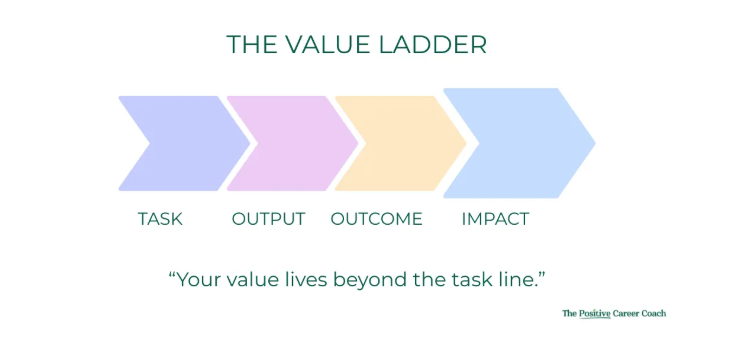
For each overlap area, add 2–3 bullets using this structure:
Task → Output → Outcome / Context → Impact
Example:
Built X → resulted in Y → in a Z-stage company selling to A-type customers→that alleviated this specific problem
This is how “transferable skills” become obvious value.
The 10-Minute Action
Pick one climate or sustainability role you’re curious about.
Draw three headings:
Product | Customer | Organisation
Then:
list three bullets from the job description under each
list three bullets from your past experience under each
circle the overlaps
That circled list becomes:
your positioning
your interview narrative
your confidence boost (the legal kind)
The overlap matrix helps you see your fit, and show your value. Both of which are essential when you are swirling in the overwhelm options or applying to ghosted silence.
READ NEXT: What you CAN do about your carer change when you are in a job you can’t leave (yet)